
How to Choose A Newborn Photographer
You're expecting a baby, you're Googling photographers at 11pm, and suddenly there are dozens of options with beautiful images and very little information about how any of it actually works. This guide covers everything you should know before booking — style, safety, pricing, what to expect, and what a photographer's business tells you about how they'll treat you as a client.
Style First: Know What You're Looking For
Before anything else, get clear on the style you want. There are two main approaches, and they look very different.
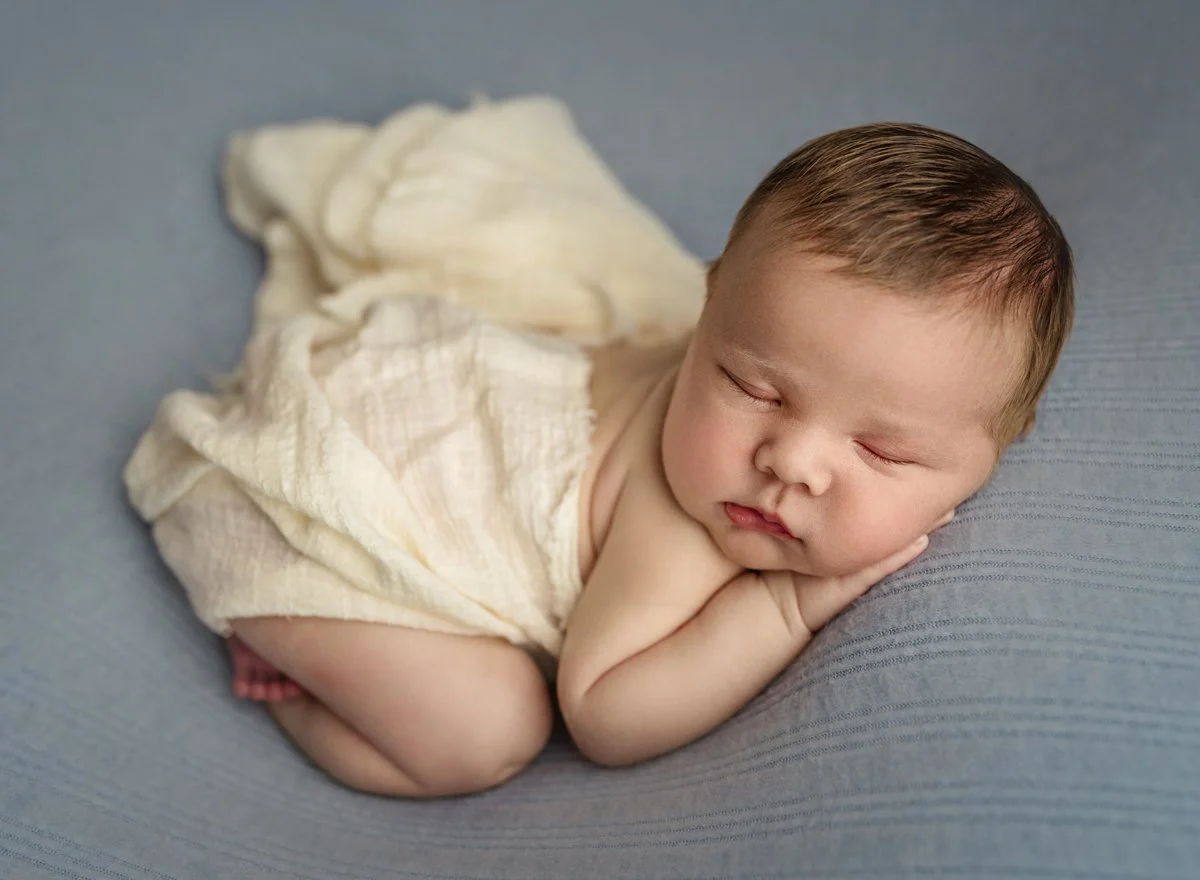
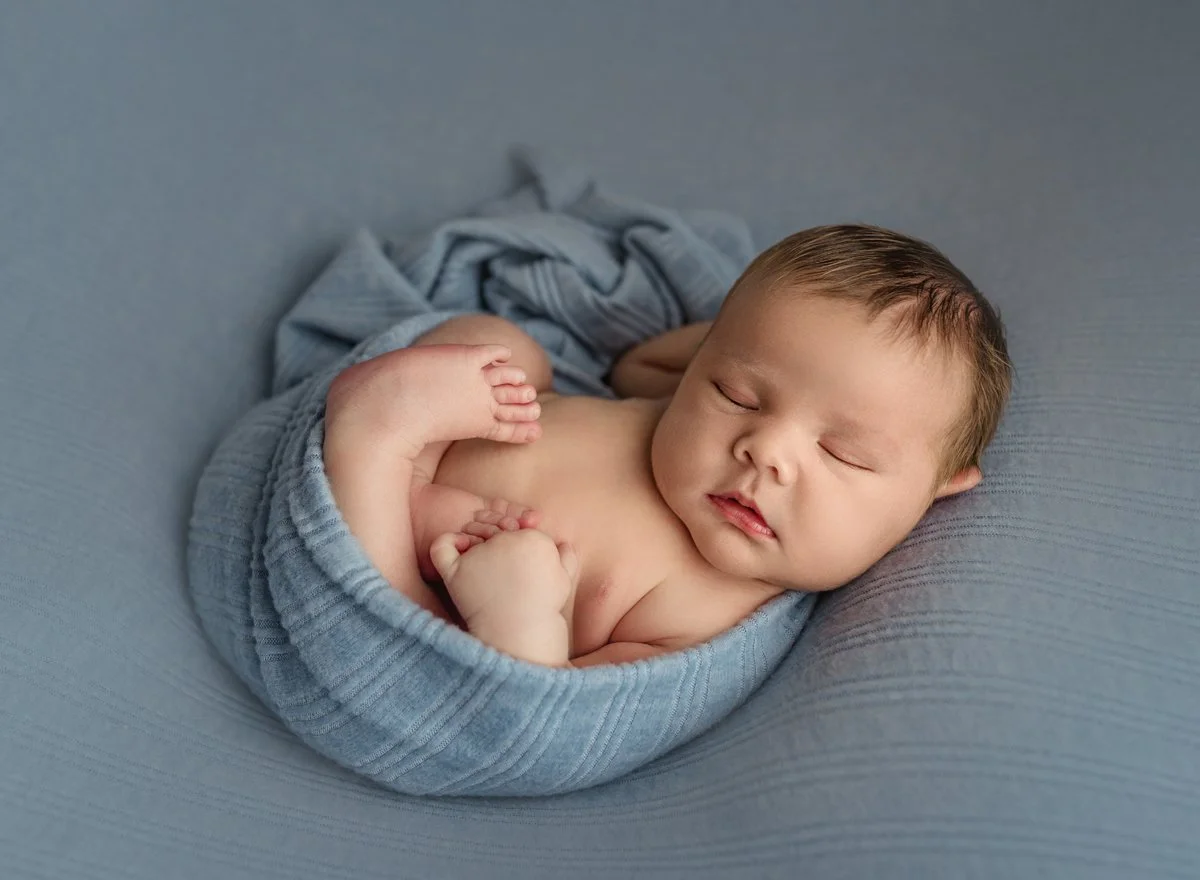
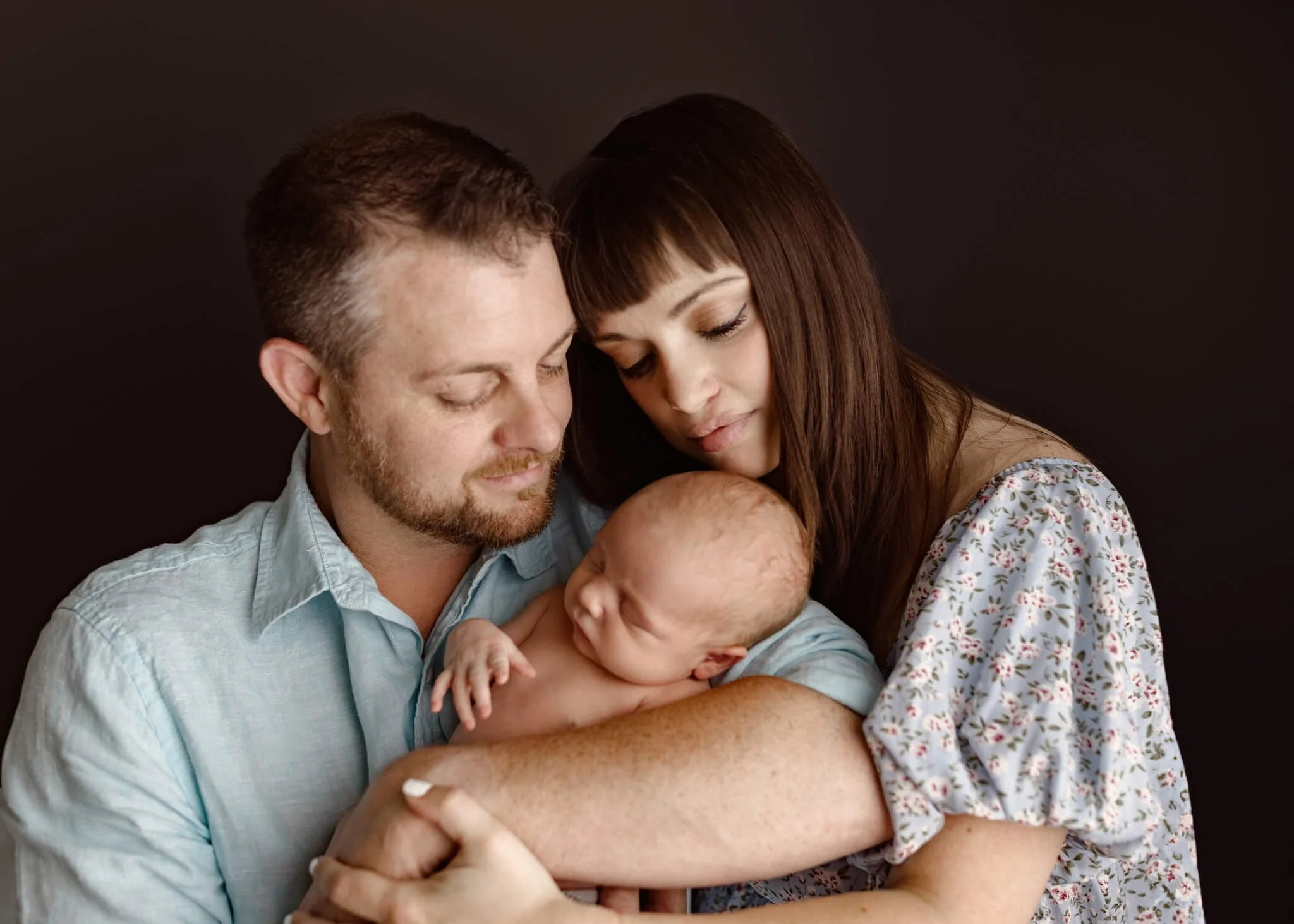
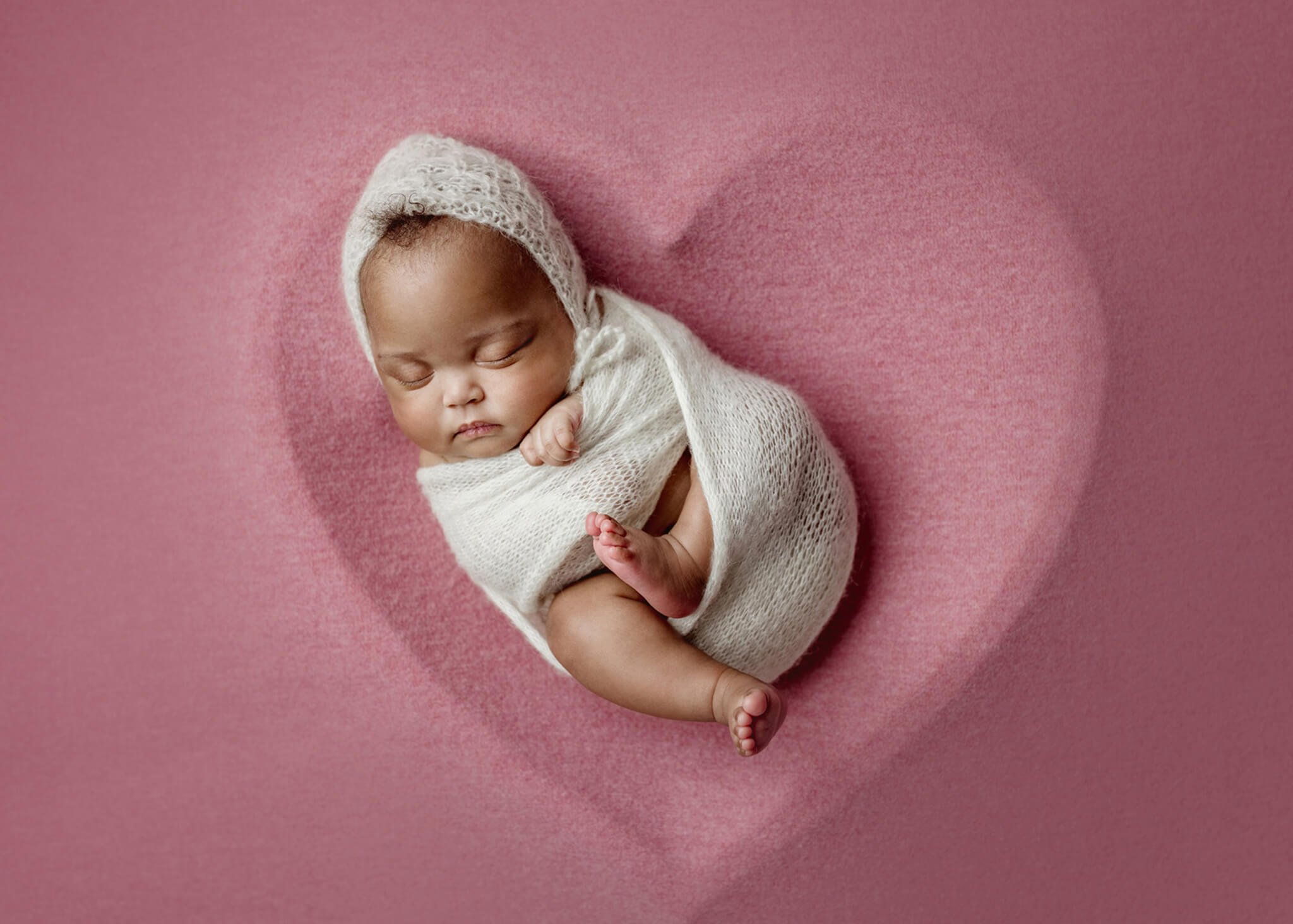
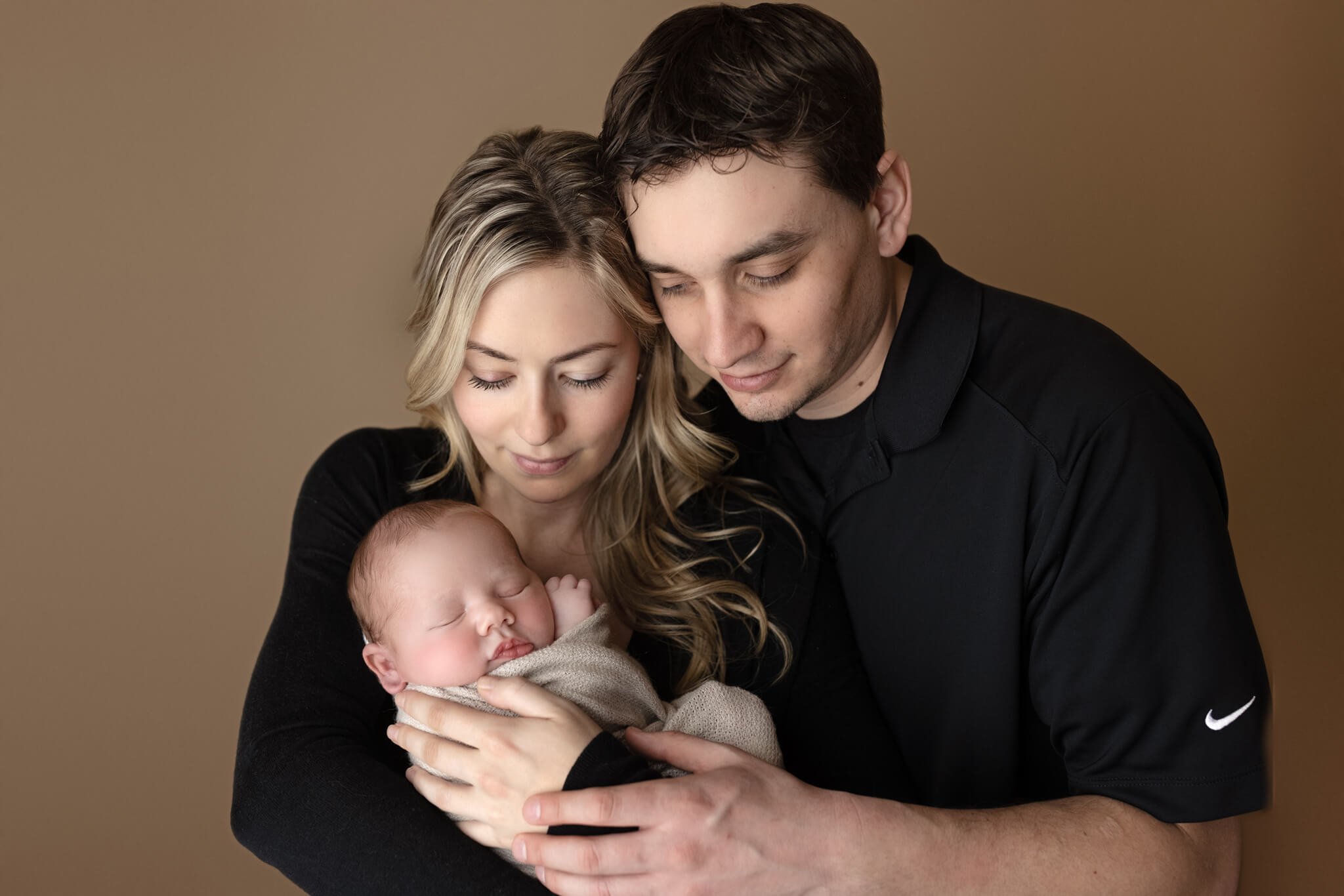
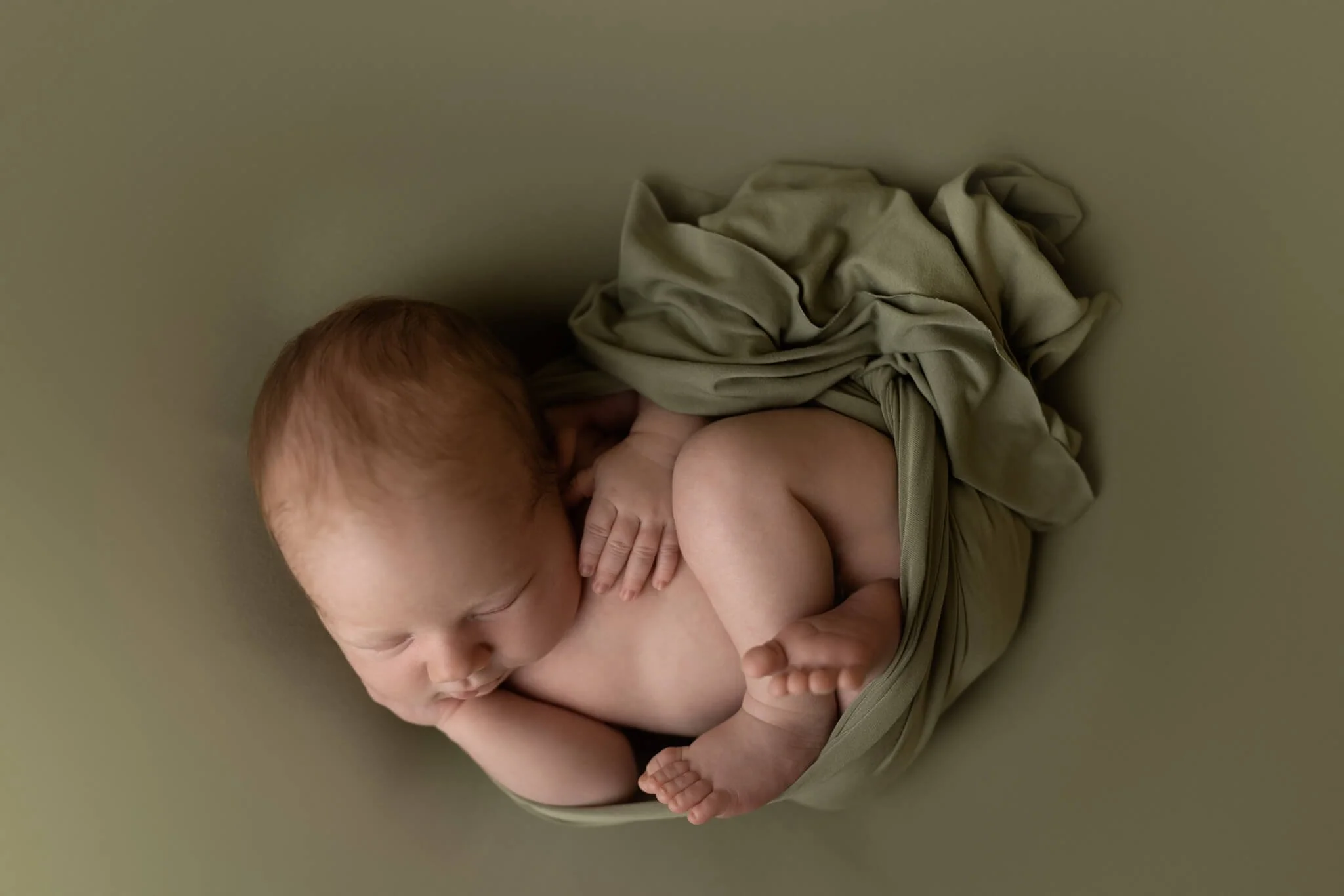
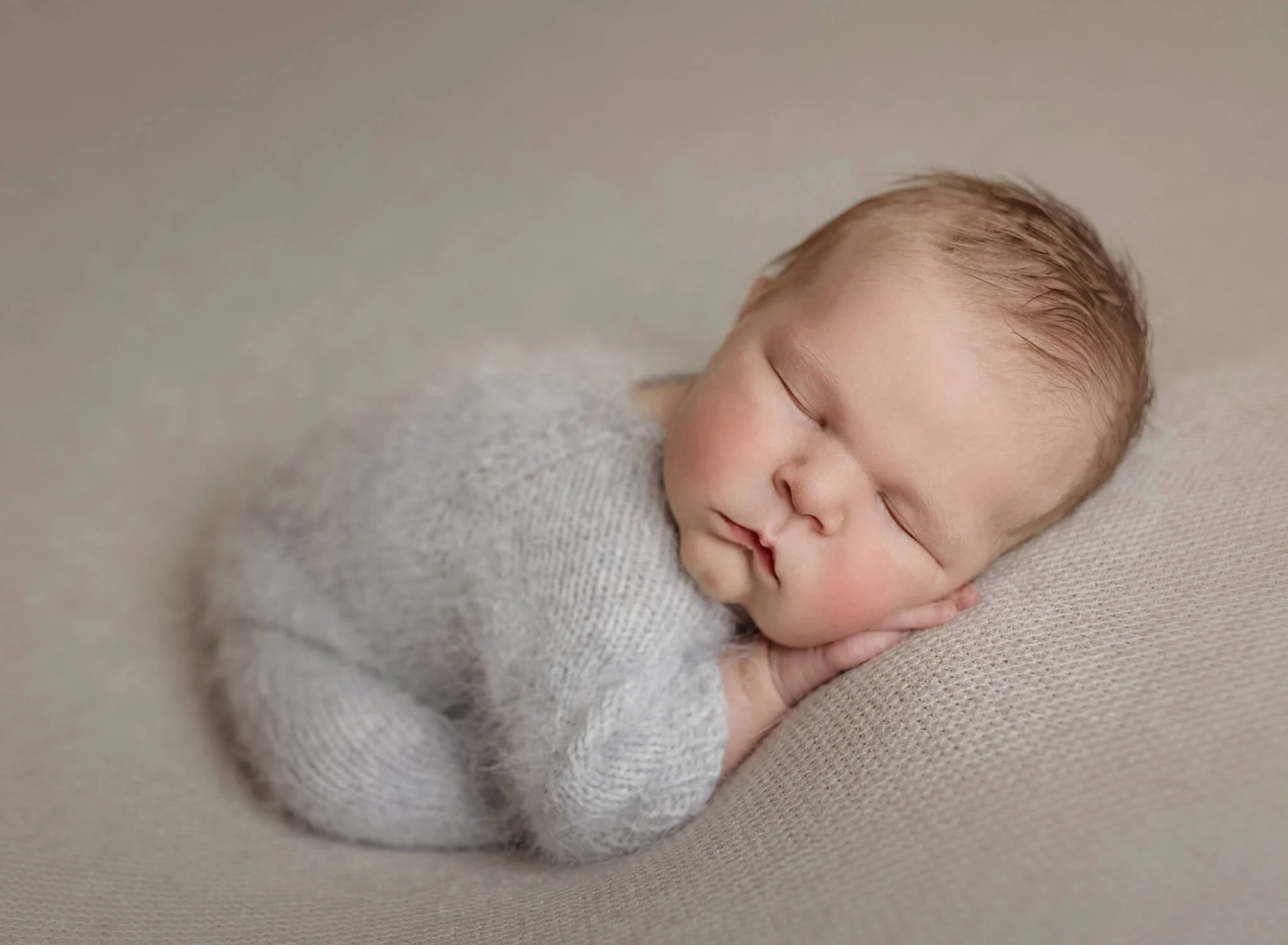
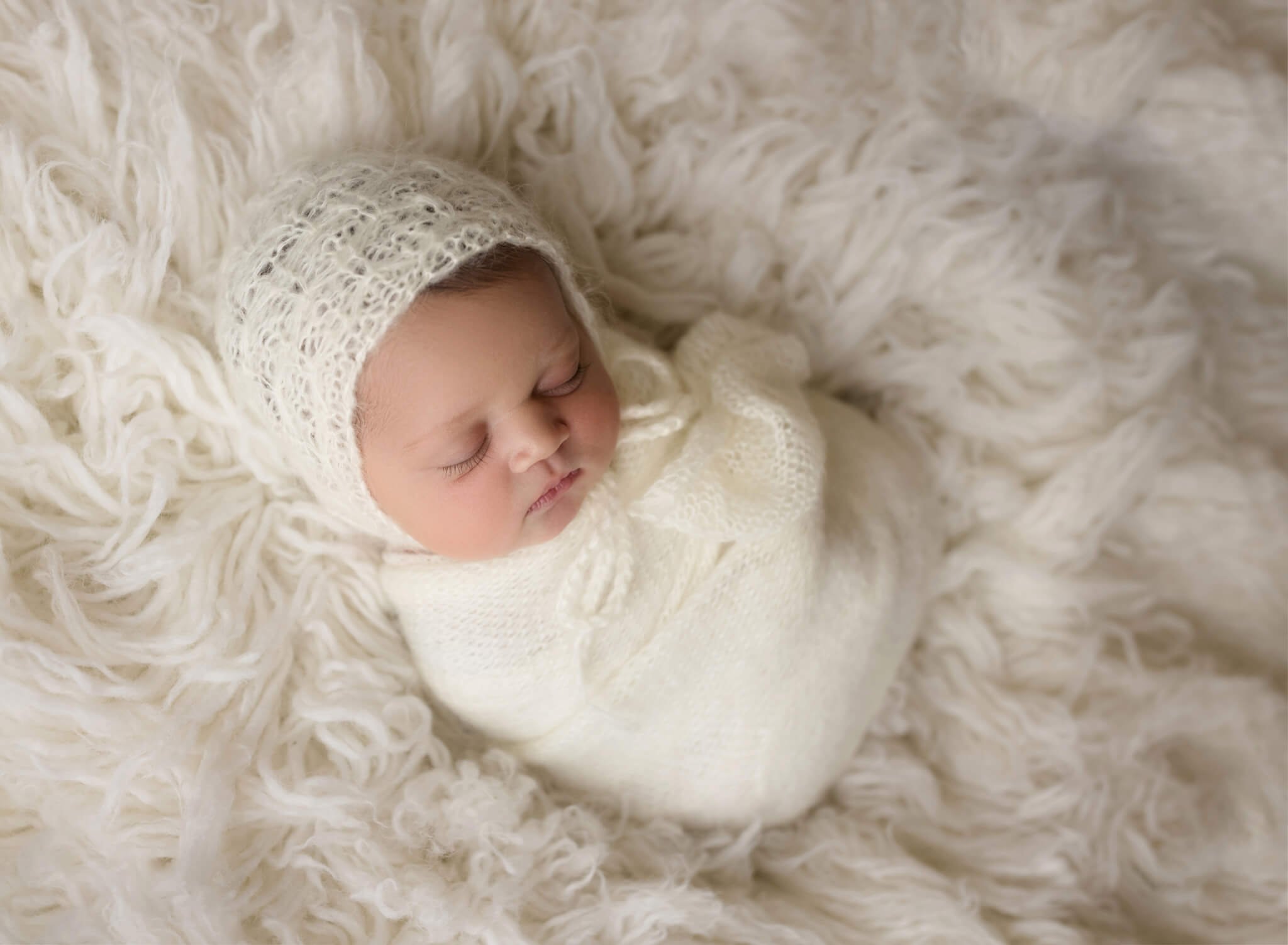
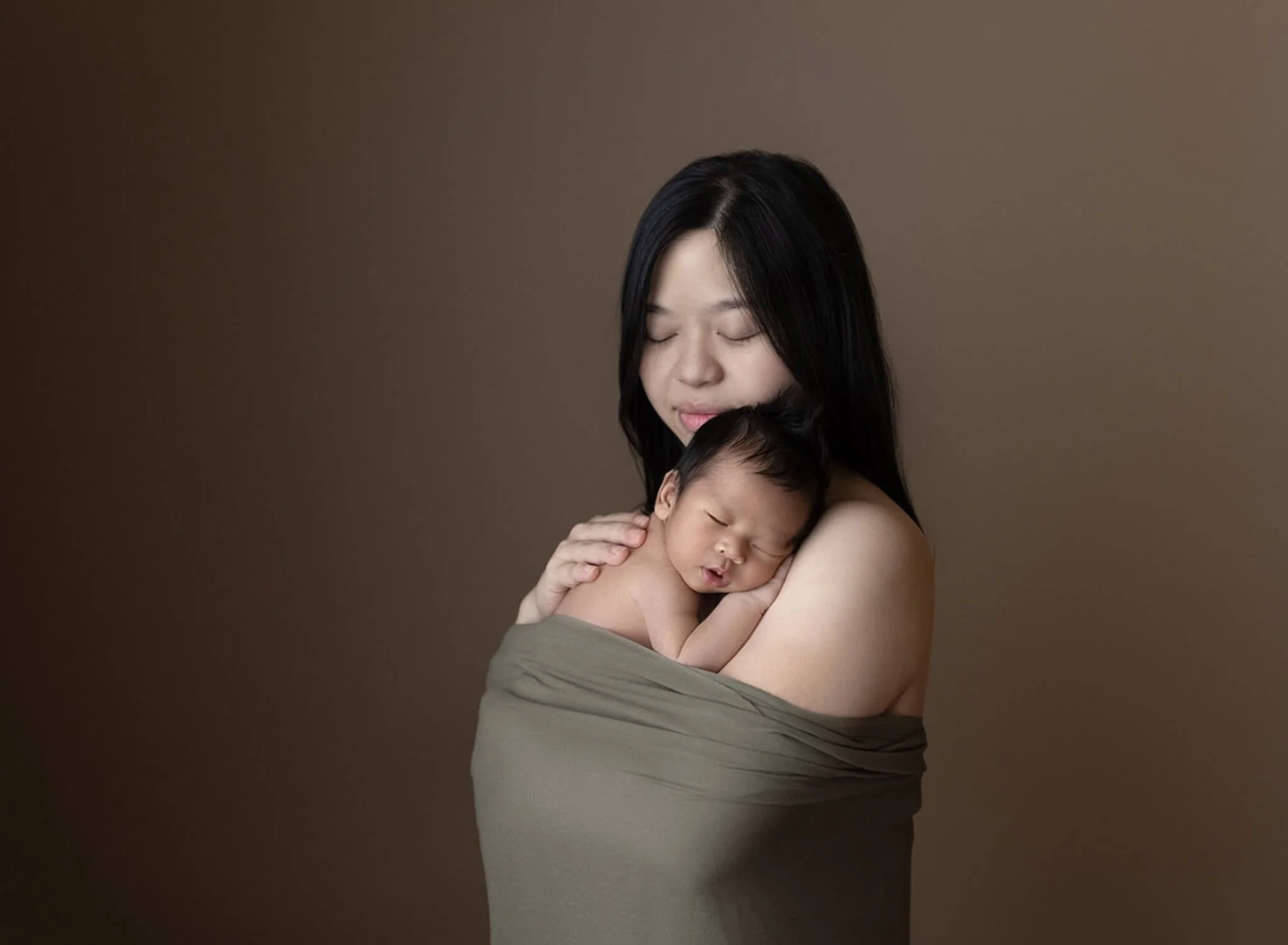
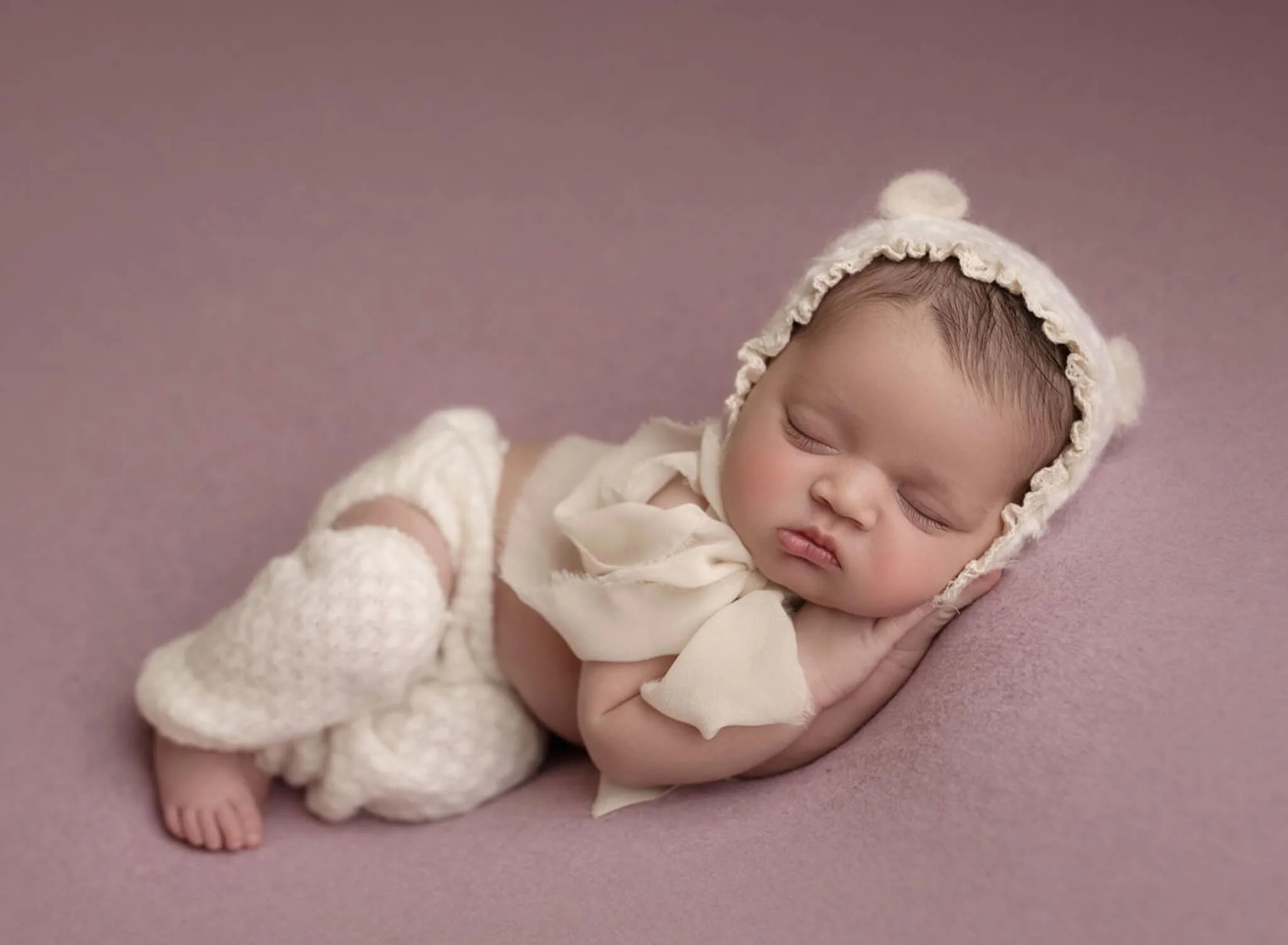
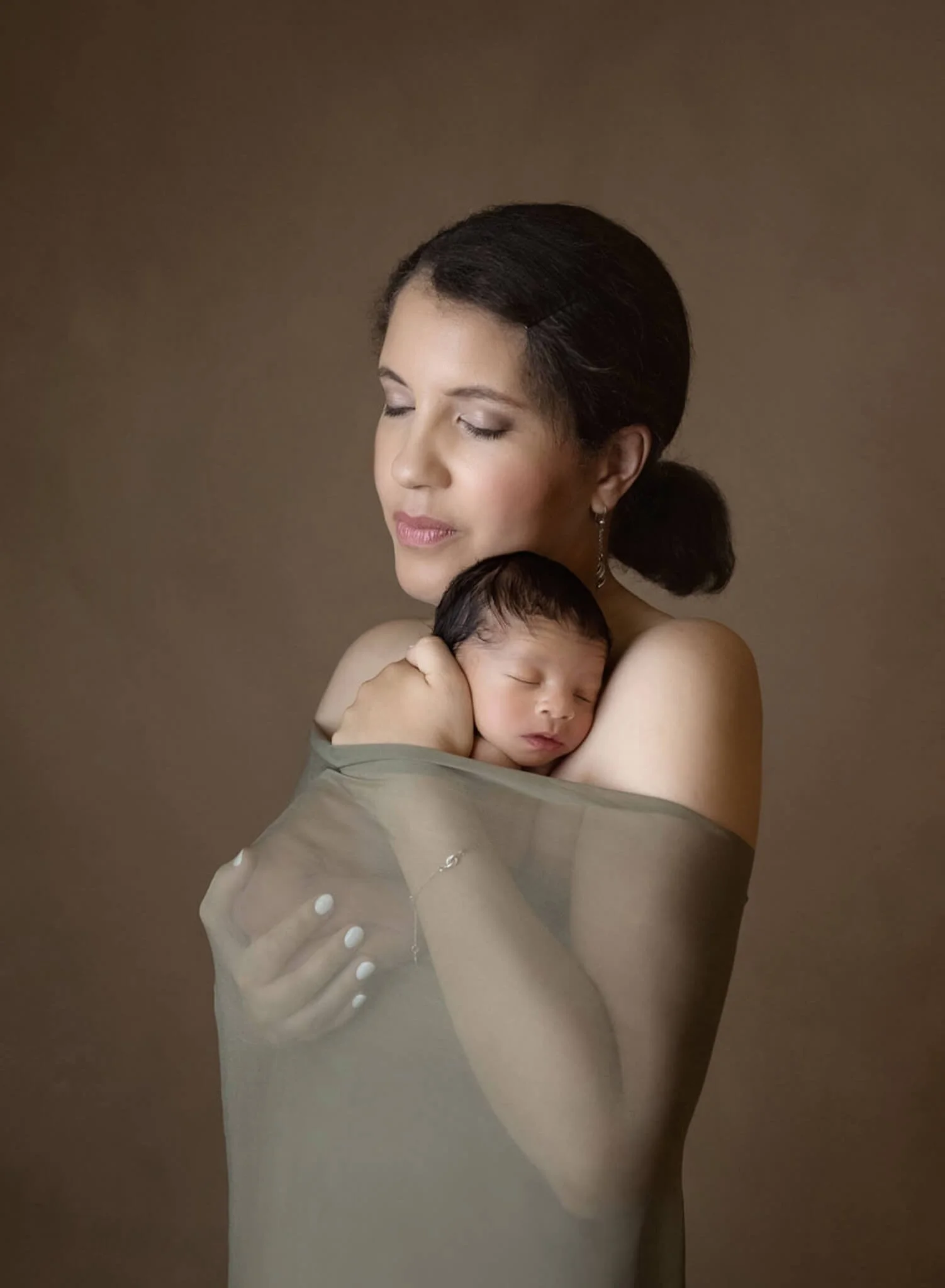
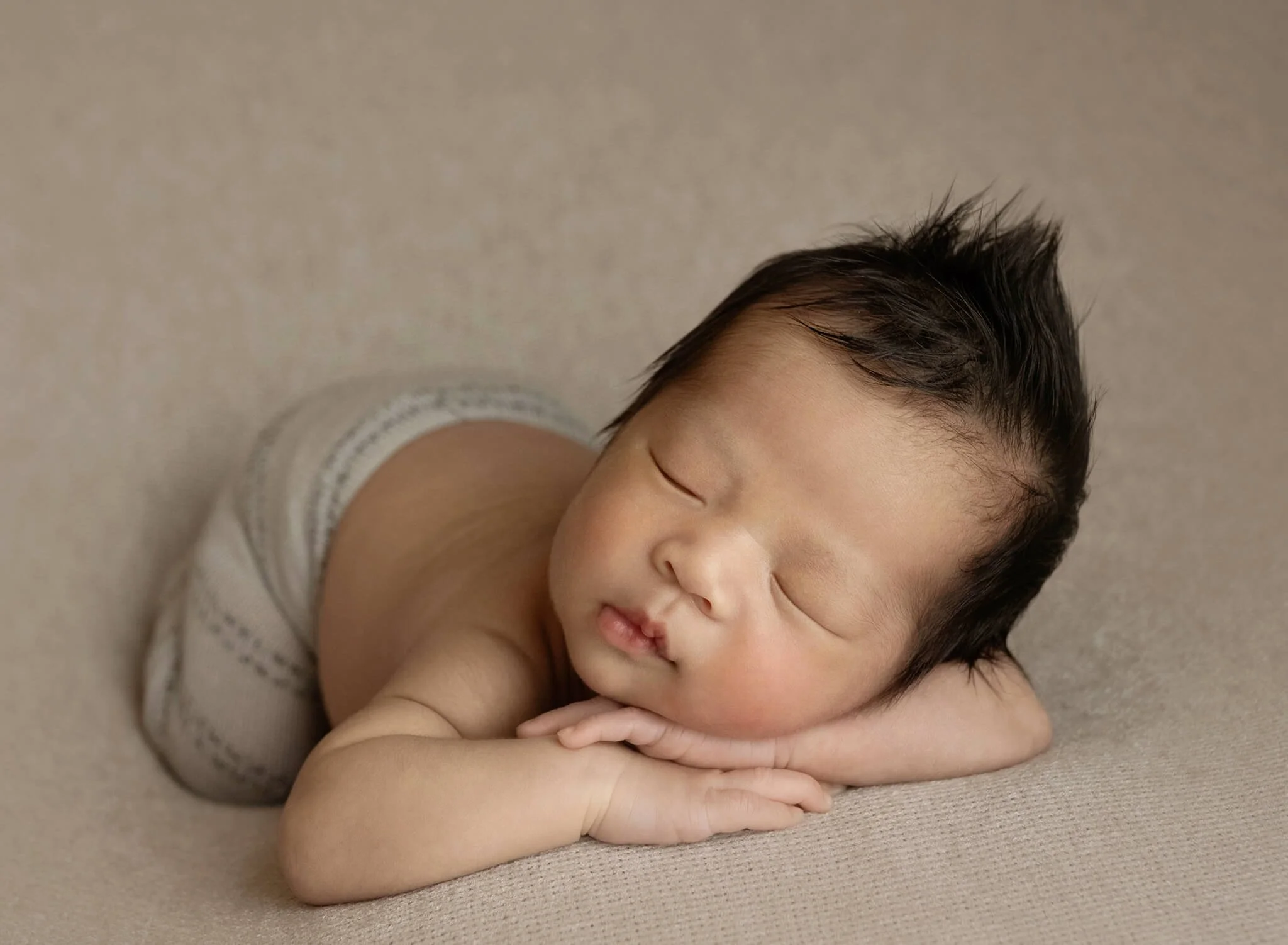
Posed studio photography is what you've probably been saving on Pinterest. Baby is gently wrapped in soft fabrics, tucked into props, or posed unwrapped on a beanbag with wraps and textures underneath. You'll see those tiny curled-up positions, sleeping babies in knit wraps, little hands tucked under chins. Most sessions also include family portraits and sibling photos, though it's worth confirming this when you inquire. Sessions happen in a studio, typically in the first 5 to 10 days when babies are sleepiest and most flexible.
Lifestyle and in-home photography takes a more documentary approach. The photographer comes to your home and captures natural moments: nursing, snuggling, siblings meeting the baby for the first time. Less posing, more candid. Baby can be a little older for these sessions.
Neither style is better. They're just different. Knowing which one you want before you start comparing photographers will save you a lot of time.
Safety Training: More Important Than It Looks
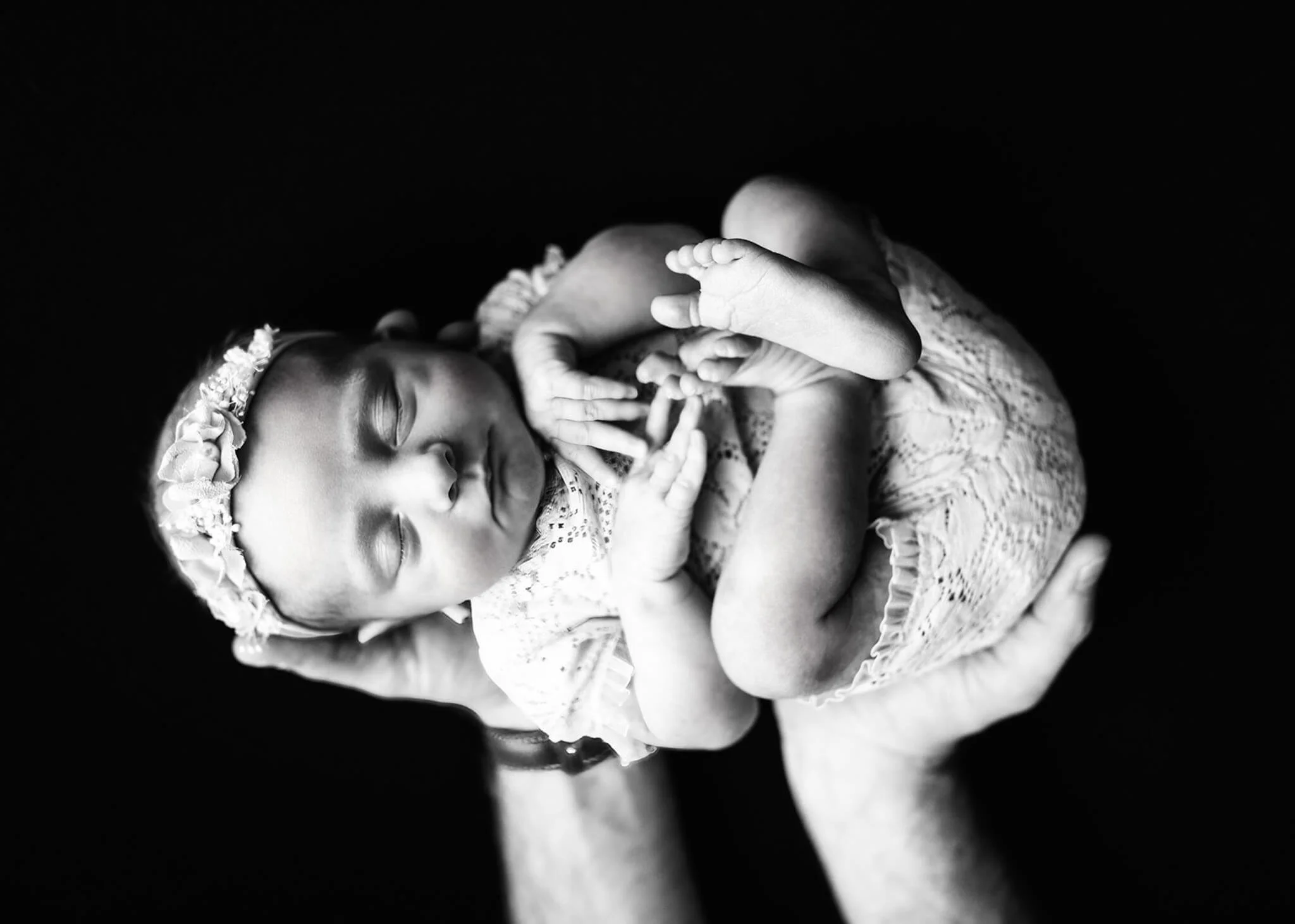
Those curled-up poses look effortless. They aren't. It takes years of experience and dedicated training to become a skilled newborn photographer. Newborn anatomy is different from older babies and children. Certain positions require composite editing, meaning two images are blended together to create a pose that would never be held unassisted. Knowing how to soothe a baby, how to support tiny bodies safely, and how to read a newborn's cues is something that develops over hundreds of sessions, not dozens.
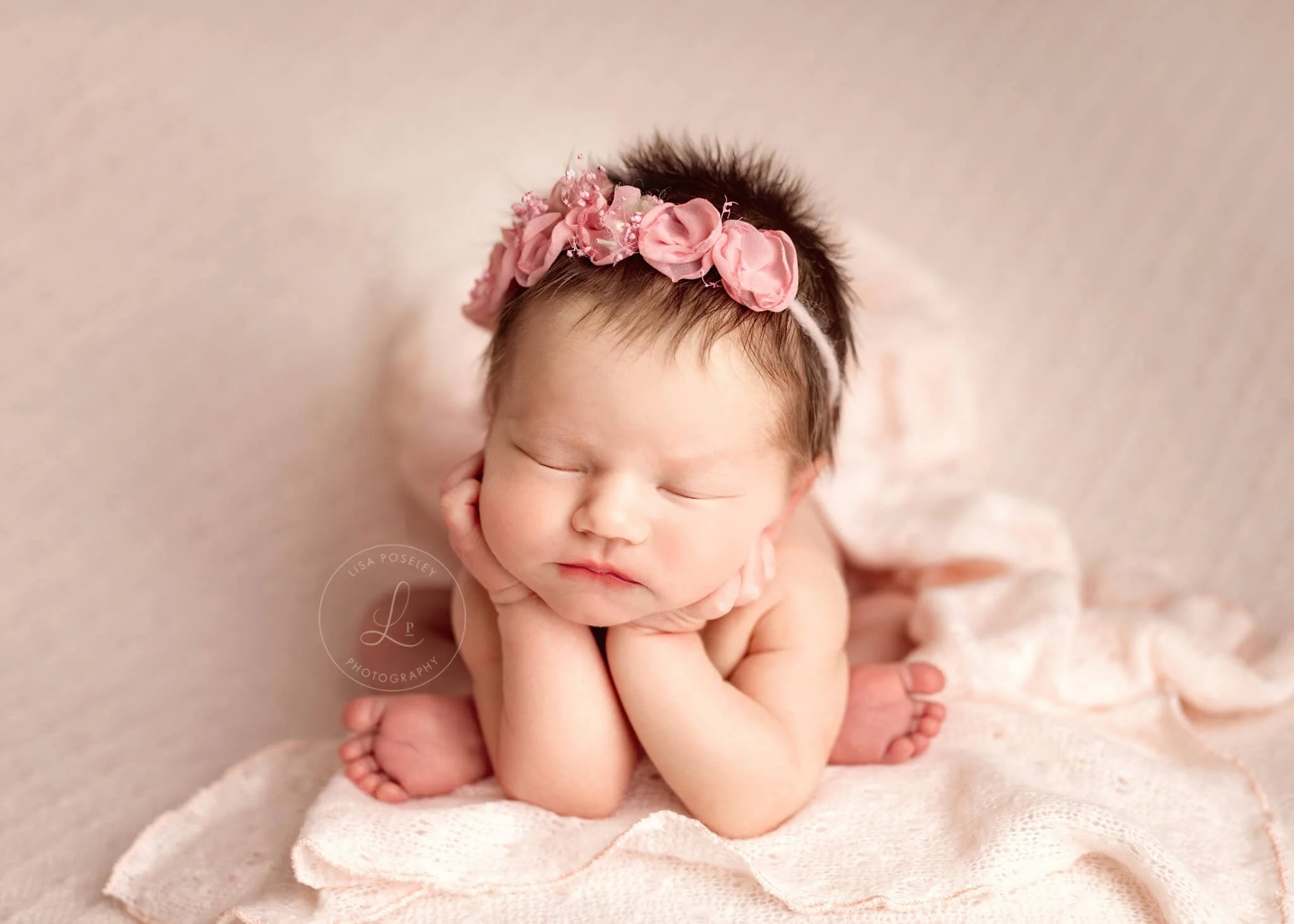
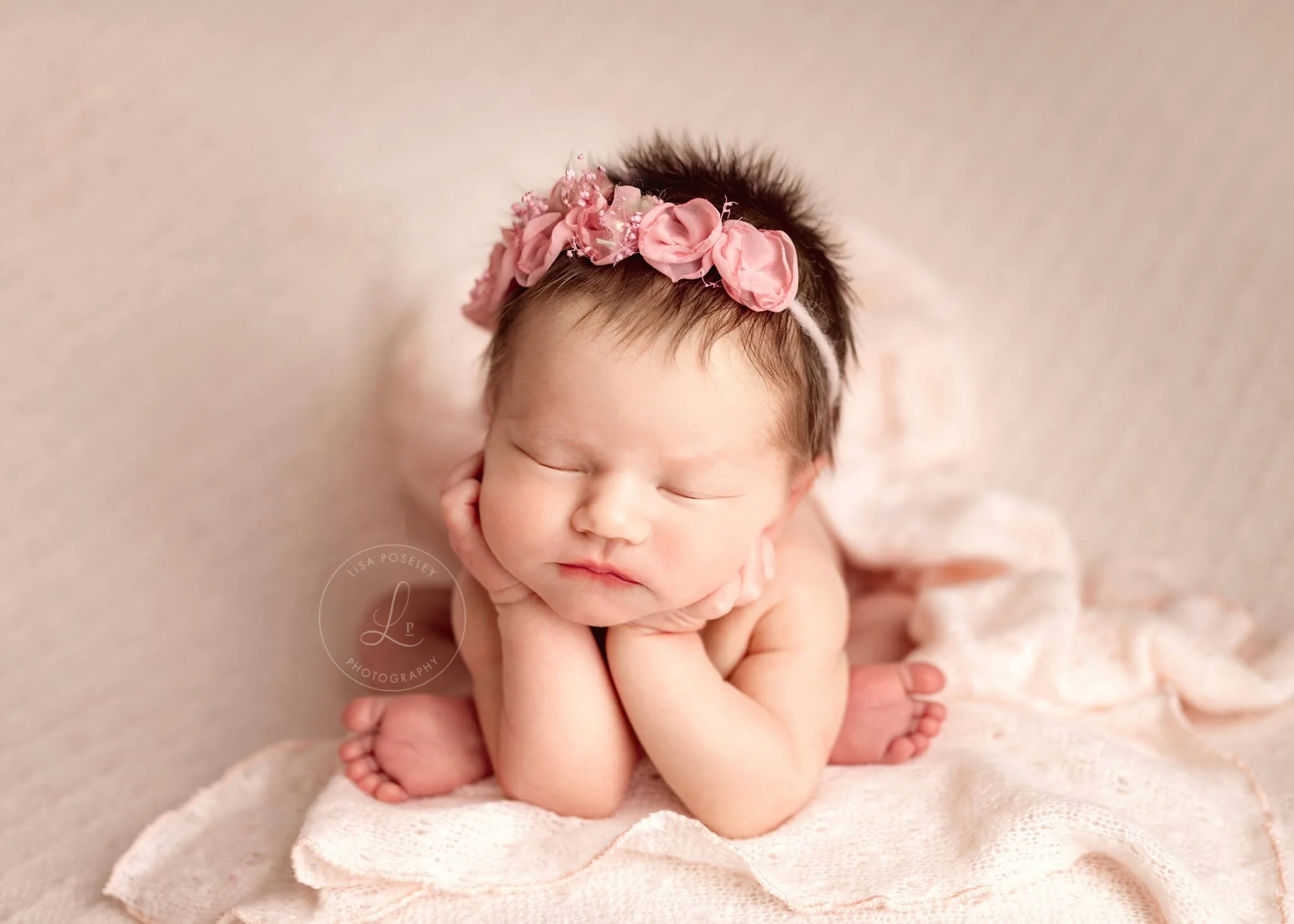
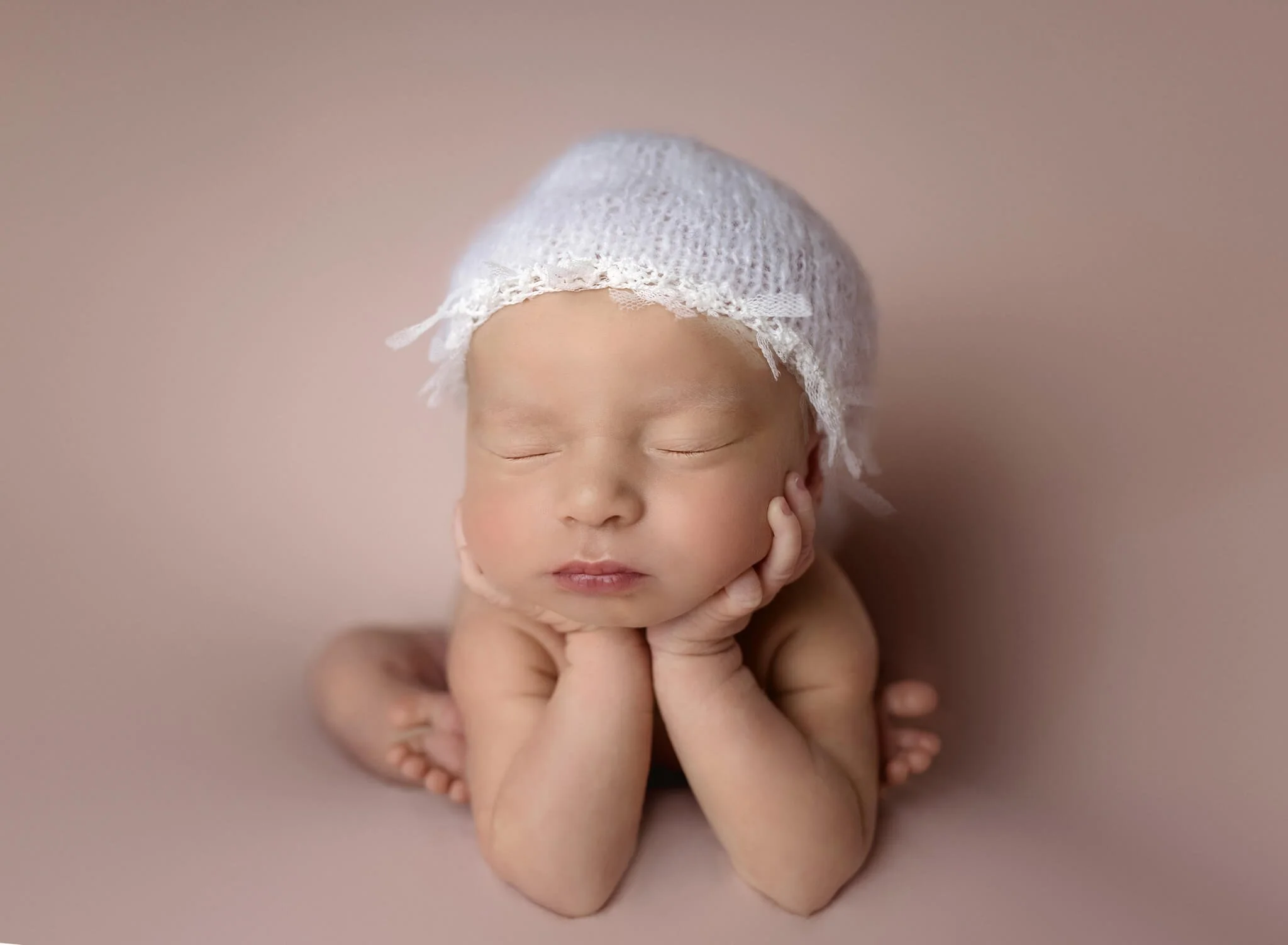
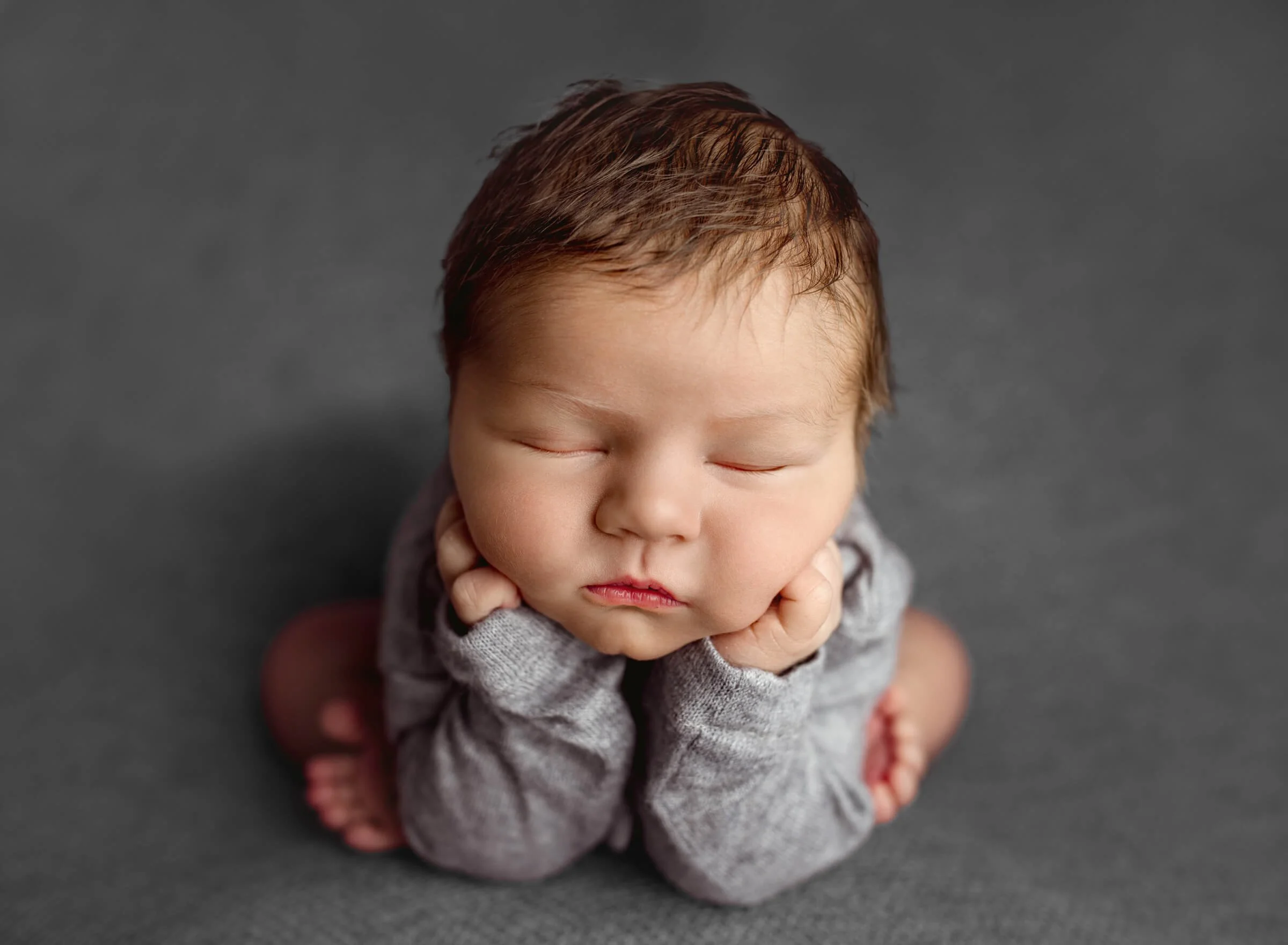
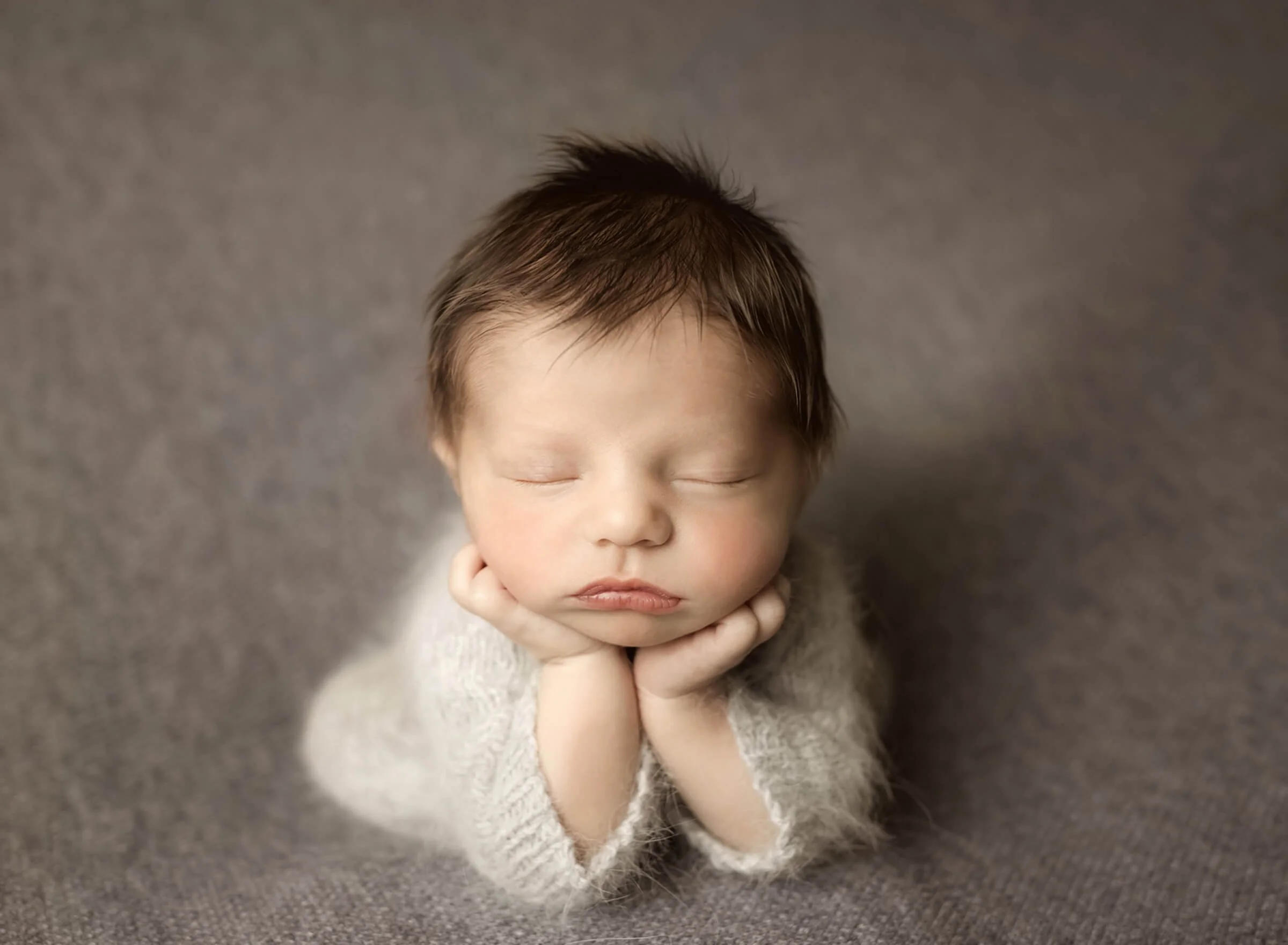
The froggy pose is a good example. It's one of the most requested newborn poses and also one of the most technically demanding. Done correctly, it's always a composite: the baby's head is supported in one image, the hands in another, and the two are blended in editing. If a photographer tells you they achieve it in a single shot without assistance, that's worth a follow-up conversation.
When you're speaking with a photographer, some gentle questions go a long way. How long have you been specializing in newborn photography? What does your process look like for more complex poses? These questions will tell you everything you need to know about their experience and approach.
BELOW: This is called the Froggy pose and requires compositing two images together. The baby always hand hands on them holding them up. The baby’s hands need to be placed a certain way on their jaw to protect the airway. Legs too need sot be placed a certain way.
Portfolio: Look Past the Hero Image
A stunning image on a photographer's homepage is a good sign, but it's not enough. Look for a dedicated portfolio page with dozens of images across many different sessions. You want to see variety — different babies, different families, different setups — not just the ten most perfect shots. If a website shows only a small handful of images, that tells you something. A photographer who is actively and consistently doing great newborn work will have plenty to show.
Be thoughtful about whether the portfolio reflects diverse families and skin tones. Great newborn photography looks beautiful across all of them, and a portfolio that shows only one type of baby is worth noting.
What's Included: Ask Before You Book
This is one of the biggest sources of confusion and frustration for families, and it's worth getting clear answers before you book. Specifically, ask about:
Pricing — is there a session fee, or is it all-inclusive? Are digital images included, and if not, what do they cost?
What's provided — props, wraps, outfits, studio gowns for parents and siblings?
Travel fees — for in-home sessions, is travel included or added on?
Family photos — are parents and siblings included in the session, or is that an add-on?
Gallery access — how long is your gallery available, and does it expire?
Retouching — are images professionally retouched, and is that done by a human or AI?
Timing: When to Book and When to Shoot
Most experienced newborn photographers book out weeks or months in advance. Reaching out during your second trimester gives you the best chance of securing your preferred date. Many photographers will hold a due date for you and confirm the actual session time once your baby arrives.
For posed studio sessions, the first 5 to 10 days is the ideal window. Babies are sleepiest, most flexible, and easiest to soothe during this time. After two weeks, posing becomes more limited, though a skilled photographer can still create beautiful work with older babies. If your baby arrives early or your due date shifts, any reputable photographer will work with you.
How a Photographer Runs Their Business Tells You a Lot
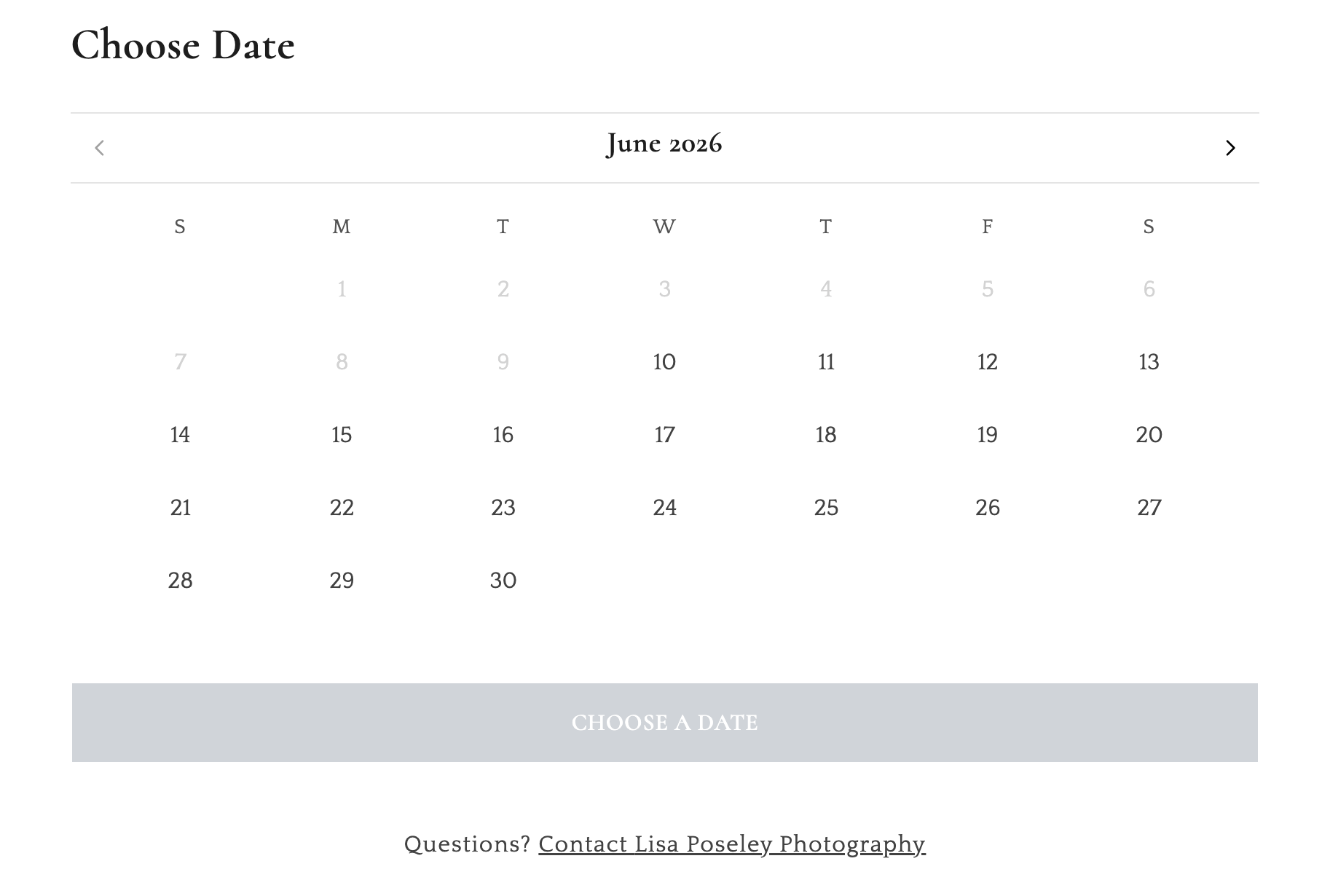
Online booking page
This is the part most parents overlook entirely, and it matters more than people realize. The images are one thing. The experience of actually working with someone is another.
A professional photographer will have a clear and easy booking process, provide a detailed prep guide ahead of your session, and communicate promptly and consistently throughout. These aren't extras. They're signs that someone runs their business with care and takes your experience seriously.
Pay attention to how a photographer communicates with you before you've even booked. If inquiries go unanswered for days, if booking feels like a scramble of back-and-forth text messages, or if pricing information is hard to come by, that's useful information.
Some questions worth asking: What does your booking process look like? What is your policy if my baby is sick on session day, or if something comes up on your end?
A Note on Price
Newborn photography pricing ranges widely, and it can be tempting to focus on finding the cheapest photographer. The photographers at the lower end of the market are often newer and still building their skills, which is fine if you understand what you're getting. It's also worth considering whether newborn photography is someone's specialty and full-time focus or goal. That depth of commitment tends to show in the work, and means they'll likely still be there when your next baby arrives.
The right photographer for you is someone whose work you genuinely love, whose process feels professional and transparent, and whose pricing makes sense for what's included. Those three things together will serve you better than price alone.
Ready to Start Your Search?
Choosing a newborn photographer is one of those decisions that feels small until you're holding a sleeping baby and wishing you'd thought about it sooner. I hope this guide helps you feel clear and confident going into the process.
If you'd like to talk through what a session at my Minneapolis studio looks like, I'd love to hear from you.